Reviewing the Cherry Blossom Branch Embroidery Pattern
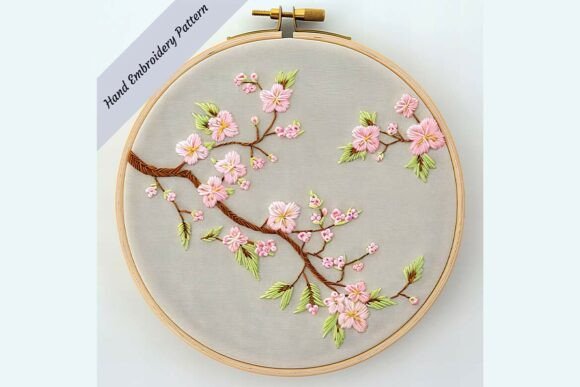
As a designer who spends more time staring at stitch simulations than I care to admit, I approach every new Cherry Blossom Branch Embroidery Pattern with a mix of skepticism and hope. We have all seen sakura designs that look like pink blobs from three feet away, or branches that resemble tangled wire rather than organic growth. So, when I pulled up this specific design—marketed as an elegant Sakura bloom with delicate pink blossoms and fresh green leaves—I was looking for nuance. I wanted to see if the line work held up under scrutiny and if the composition offered enough breathing room for actual thread to shine.
The first impression is one of restrained elegance. Unlike some overly dense floral motifs that scream for attention, this pattern relies on negative space. The branch curves with a natural asymmetry that feels authentic to nature, not forced into a perfect circle. For those of us creating Hand Embroidery Patterns or digitizing for machines, this balance is critical. It suggests a design that respects the fabric rather than overpowering it. The visual personality is soft yet structured, making it a versatile candidate for a wide range of applications, from high-end boutique apparel to cozy home decor.
Real-World Application: The Custom Tote Test
To truly evaluate a design, you have to imagine it stitched out. I recently worked on a project for a client launching a spring collection of canvas goods. We needed a tote bag design that felt artisanal but clean. This Cherry Blossom Branch Embroidery Pattern became the immediate frontrunner. Why? Because the layout works beautifully on curved surfaces and flat planes alike.
When placed on a natural cotton canvas, the delicate pink blossoms popped against the neutral background without looking garish. The fresh green leaves provided just enough contrast to ground the design. If you are an Etsy seller or run a small shop product line, this kind of versatility is gold. It translates well to a personalized gift because it doesn’t dominate the item. You can add a monogram below the branch, or leave it standalone for a minimalist aesthetic. The design’s openness means it doesn’t require a massive hoop, making it cost-effective for production while still looking substantial.
Performance Across Different Products
Beyond totes, I evaluated how this graphic would perform on other common substrates. For sweatshirt embroidery, the design holds its own. The branch structure provides a strong anchor, preventing the softer blossom elements from getting lost in the fleece texture. However, stitch density becomes a conversation point here. On thicker fabrics, you want enough coverage to hide the garment color, but not so much that the fabric puckers. This pattern seems to strike a middle ground, likely utilizing a mix of fill stitch for the larger petals and satin stitch or running stitch for the finer branch details.
For baby embroidery projects, such as onesies or nursery blankets, the softness of the theme is a major selling point. Parents gravitate toward nature motifs that feel gentle. The rounded shapes of the blossoms are safe and appealing. However, when moving to custom apparel like fitted t-shirts, you must consider the stretch. A design with long, uninterrupted satin stitches across a branch can snap or distort on jersey knits. If you are using this as a machine embroidery design, checking the underlay and pull compensation is essential before committing to a final run.
Where Caution Is Required
No design is universal, and honest reviewing means highlighting the limitations. While this Cherry Blossom Branch Embroidery Pattern is robust, it requires careful handling in specific scenarios. First, consider hoop size. If you are attempting to shrink this down for a small embroidered patch or a cap front, the delicate details of the individual petals may merge. What looks like a distinct flower at two inches might become a pink smudge at half an inch. Always test scale reductions on scrap fabric.
Second, fabric texture matters. On highly textured materials like terry cloth or heavy linen, the fine lines of the branch might get lost. In these cases, you might need to adjust the thread colors for higher contrast or simplify the digitizing if you have control over the embroidery file. Dark fabrics present another challenge. If the design relies on light pink threads, they will vanish on navy or black unless you use a bright underlay or switch to a metallic or high-sheen thread. Always create a printable mockup in black and white to check value contrast before stitching.
Visual Appeal and Brand Consistency
From a branding perspective, this design exudes professionalism. It avoids the clip-art feel that plagues many low-quality design assets. For a craft business, consistency is key to building trust. Using a cohesive, high-quality motif like this signals to buyers that you care about aesthetics. It enhances the perceived value of the finished product, whether it is a holiday embroidery gift or a year-round staple.
The mood created by the sakura theme is one of renewal and calm. This emotional resonance drives buyer engagement. Customers are not just buying a stitched item; they are buying the feeling the design evokes. When used in commercial embroidery projects, such as corporate gifts or boutique branding, this subtle elegance aligns well with brands that prioritize sustainability, mindfulness, or natural beauty.
Practical Notes for Designers and Makers
Before you load this into your machine or start threading your needle, here are my practical recommendations based on real-world usage:
- Test on Scrap Fabric: Never skip this step. Check how the stabilizer interacts with your chosen material. A cut-away stabilizer might be best for stretchy fabrics, while tear-away works for woven cottons.
- Check Thread Contrast: Ensure your pink and green threads have enough distinction from each other and the background fabric. Poor contrast kills detail.
- Review Stitch Density: If you are digitizing or editing the digital embroidery file, ensure the density isn’t too high for lightweight fabrics to prevent puckering.
- Verify Licensing: If you plan to sell items made with this pattern, confirm the license terms. Some Graphics are for personal use only, while others allow commercial sales of finished goods.
- Inspect Small Details: Zoom in on the branch tips. Are the stitches too short? Do they jump excessively? Clean up any unnecessary trims to speed up production.
In conclusion, the Cherry Blossom Branch Embroidery Pattern is a strong contender for your next project. It balances artistic flair with practical applicability. Whether you are creating a personalized gift for a friend or stocking your online store with spring essentials, this design offers the reliability and beauty needed to succeed. Just remember to respect the materials, test your setup, and let the natural elegance of the sakura speak for itself.