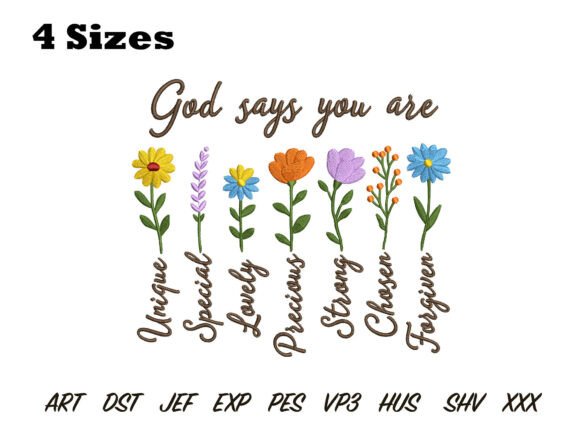
God Says You Are: A Designer’s Review
As an embroidery designer who has spent years digitizing for small businesses, I approach every new machine embroidery design with a critical eye. It is not just about aesthetics; it is about functionality, brand alignment, and production viability. Recently, I reviewed the God Says You Are Embroidery Design, a piece categorized under Religion but designed with a playful, whimsical touch. For boutique owners, Etsy sellers, and apparel decorators, this design offers a unique opportunity to blend faith-based messaging with modern, charming merchandise. However, before you load this digital embroidery file into your machine for a large commercial run, there are specific factors to consider regarding its application on various textiles.
First Impressions: Whimsy Meets Faith
The immediate impression of the God Says You Are Embroidery Design is one of approachability. Unlike traditional religious embroidery, which often leans toward heavy, ornate, or strictly classic styles, this design brings a bit of charm to fabrics. The description highlights its suitability for t-shirts, towels, and home decor, suggesting a lighter, more decorative intent. For a small business owner, this is crucial. It signals that the design is not intended for stiff, formal uniforms but rather for items that invite connection and warmth. The playful nature of the design makes it ideal for brands that want to project friendliness and inclusivity. Whether you run a local bakery, a florist shop, or a creative studio, this aesthetic aligns well with a handmade, community-focused brand identity.
Strategic Applications for Small Business Merch
When evaluating how this design performs in real-world scenarios, versatility is key. Here is how I envision this embroidery file working across different product lines for small business merch:
- Branded Patches: This design shines as an embroidered patch. Patches allow customers to add a personal touch to jackets, bags, or hats without committing to a permanent print. The whimsical style translates well to iron-on or sew-on applications, increasing the perceived value of the finished product.
- Apron Embroidery: For cafes, bakeries, or craft studios, staff aprons are walking billboards. Placing this design on the chest or pocket area adds a layer of personality to uniform embroidery. It softens the professional look, making staff appear more approachable to customers.
- Tote Bag Design: Tote bags are staples for boutique merchandise. The playful text and imagery work beautifully on canvas or cotton totes. Ensure the hoop size accommodates the bag’s seam allowances, but the visual impact on a flat surface like a tote is generally high.
- Cap Embroidery: While possible, cap fronts require careful handling. The curved surface can distort detailed designs. If using this on caps, ensure the design is simplified or scaled appropriately to maintain legibility without excessive puckering.
- Customer Gifts and Event Merch: Small tokens of appreciation, such as embroidered hand towels or tea cozies, benefit from this charming aesthetic. It elevates a simple item into a memorable keepsake, enhancing customer loyalty.
Navigating Technical Challenges and Fabric Constraints
While the design is charming, technical execution determines whether it looks premium or amateur. As a designer, I advise caution in several areas. First, consider stitch density. Playful designs sometimes use dense fills to create bold shapes. On lightweight fabrics like thin t-shirts or silky towels, high density can cause pulling or distortion. Always test on a scrap piece of your actual inventory fabric before committing to production.
Second, pay attention to thread colors and contrast. If you are stitching on dark uniforms or navy tote bags, ensure the design includes enough light-colored threads to remain visible. Conversely, on white aprons, avoid threads that are too pale, as they may get lost in the wash. The description mentions it is perfect for any item that could use a fun touch, but "fun" should not come at the cost of readability.
Third, be mindful of fabric texture. Textured materials like waffle-knit towels or rough canvas can obscure fine details. If the design includes small lettering or intricate outlines, these may merge together on textured surfaces. In such cases, increasing the size of the design or choosing a smoother fabric variant is recommended. Additionally, always use the proper stabilizer. For stretchy fabrics like jersey t-shirts, a cut-away stabilizer is essential to prevent the design from warping after washing. For woven fabrics like tote bags, a tear-away may suffice, but testing is non-negotiable.
Enhancing Brand Identity and Customer Trust
Incorporating the God Says You Are Embroidery Design into your product line does more than add decoration; it communicates values. For businesses in the Religion category or those serving faith-based communities, this design reinforces a message of affirmation and care. It builds customer trust by showing that your brand pays attention to detail and cares about the emotional resonance of its products. When customers see high-quality custom apparel or accessories featuring thoughtful designs, they perceive the brand as professional and authentic.
Moreover, consistency in visual presentation matters. If your brand is known for handmade, heartfelt products, this design fits seamlessly. It avoids the cold, mass-produced look of printed graphics, offering the tactile warmth of thread. This distinction is vital for Etsy sellers and crafters who compete on the quality of their handmade product offerings. A well-executed embroidery job signals craftsmanship, justifying higher price points and fostering buyer engagement.
Practical Designer Notes for Production
Before you launch this design into your commercial embroidery workflow, follow these practical steps to ensure success:
- Test in Black and White: Before selecting vibrant thread colors, stitch the design in black thread on white fabric. This helps you evaluate the clarity of the shapes and spacing without the distraction of color. If it looks muddy in monochrome, it will look cluttered in color.
- Check Scalability: Verify if the design holds up at smaller sizes, such as on a pocket or a small patch. Some playful designs lose their charm when shrunk too much. Confirm the minimum viable size for your intended application.
- Review Hoop Size Compatibility: Ensure the design fits within your standard hoop sizes. If it requires a large hoop, calculate if this impacts your production speed or material costs. Efficient nesting of designs saves time and money.
- Create a Printable Mockup: Use digital tools to create a printable mockup for client approval. Show stakeholders how the design looks on an apron versus a tote bag. Visualizing the final product helps manage expectations and reduces revision requests.
- Confirm Licensing Terms: Always verify the commercial licensing terms of the digital embroidery file. Ensure you have the right to use it for sold goods, especially if you are producing items for third-party clients or large-scale retail.
- Compare with Existing Assets: Place this design alongside your other design assets. Does it complement your current logo or brand palette? Consistency across your product line strengthens brand recognition.
In conclusion, the God Says You Are Embroidery Design is a versatile asset for small businesses looking to add a touch of whimsy and warmth to their merchandise. By paying attention to technical details like stabilizer choice, fabric texture, and stitch density, you can transform this playful design into a premium product feature. Whether used on aprons, patches, or totes, it has the potential to enhance your brand identity and delight your customers. Just remember to test thoroughly and respect the nuances of embroidery production to achieve the best results.